


 PT


- 1 minute read
 Go back
Home

The Via Dolorosa in Jerusalem is the route traditionally associated by Christians with Jesus’ journey from his condemnation to his crucifixion. It runs through the Old City of Jerusalem and corresponds to the Way of the Cross, organized into 14 stations. The route traditionally begins near the site associated with Jesus’s condemnation and ends at the Church of the Holy Sepulcher, where the final stations are located.
What you’ll find here:
What is the significance of the Via Dolorosa?
Where does the Via Dolorosa begin and end in Jerusalem?
What are the 14 stations of the Via Dolorosa?
Via Dolorosa: map and main points along the route
Is it possible to walk the Via Dolorosa today?
Frequently Asked Questions About the Via Dolorosa
What is the significance of the Via Dolorosa?
Via Dolorosa literally means “Way of Sorrows.” In Christian tradition, it represents Jesus’ journey with the cross to the site of the crucifixion.
Today, the route winds through the bustling streets of the Old City, passing religious buildings, shops, and markets. It is both a place of pilgrimage and a historical itinerary that helps visitors understand the religious significance of Jerusalem.
The Custody of the Holy Land describes it as the traditional route between the site associated with the Flagellation and that of the Crucifixion.
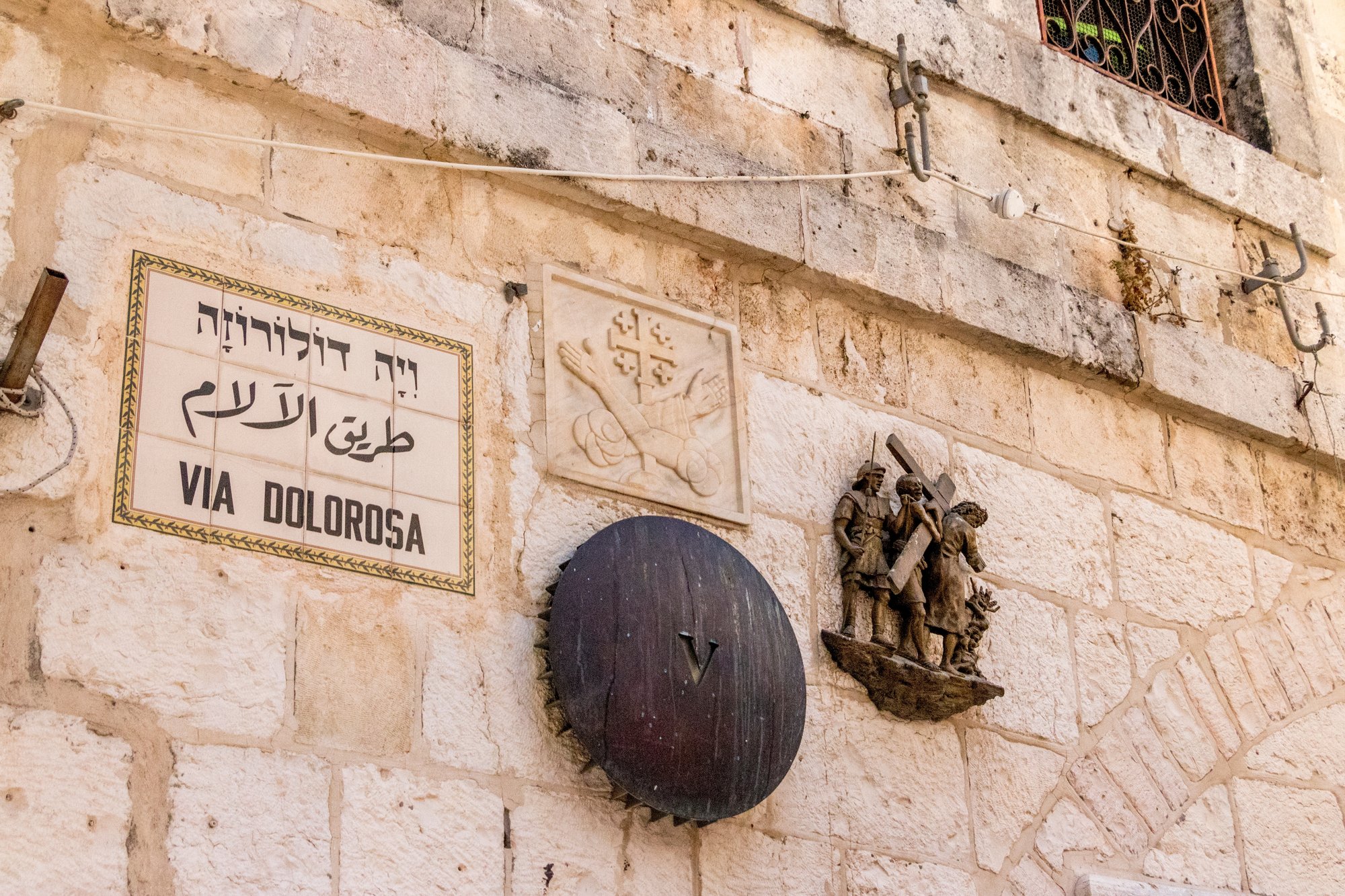
Where does the Via Dolorosa begin and end in Jerusalem?
The traditional route begins in the Muslim Quarter of the Old City, near the Lions’ Gate. The first station is located in the courtyard of the Al-Omariya School, across from the Convent of the Flagellation. The second station is next to the Shrine of the Condemnation, where tradition marks the place where the cross was placed upon Jesus.
From here, the Via Dolorosa in Jerusalem crosses the Old City to the Church of the Holy Sepulcher, where the final stations are located.
What are the 14 stations of the Via Dolorosa?
The stations of the Via Dolorosa depict different episodes of the Passion according to Christian tradition.
|
Station |
Episode Commemorated |
|
I |
Jesus is condemned to death |
|
II |
Jesus Receives the Cross |
|
III |
Jesus falls for the first time |
|
IV |
Jesus Meets His Mother |
|
V |
Simon of Cyrene Helps Jesus |
|
VI |
Veronica Wipes Jesus’ Face |
|
VII |
Jesus falls for the second time |
|
VIII |
Jesus Meets the Women of Jerusalem |
|
IX |
Jesus Falls for the Third Time |
|
X |
Jesus Is Stripped of His Clothes |
|
XI |
Jesus Is Nailed to the Cross |
|
XII |
Jesus dies on the cross |
|
XIII |
Jesus Is Taken Down from the Cross |
|
XIV |
Jesus Is Placed in the Tomb |
The last stations are associated with the Holy Sepulcher complex. The Custody, for example, identifies the 12th station as being on Calvary and the 13th as being in front of the shrine of Mater Dolorosa.
Via Dolorosa: map and main points along the route
To understand the map of the Via Dolorosa in Jerusalem, it is helpful to divide the visit into three parts:
Beginning: The Scourging and the Condemnation
The Shrine of the Flagellation is one of the key landmarks at the beginning of the route. Here, Christian tradition commemorates the flagellation and condemnation of Jesus.
Streets of the Old City
The intermediate stations are scattered throughout the narrow streets of the Old City. Some are marked by small chapels, inscriptions, or signs, so a map or guide can help you identify them along the way.
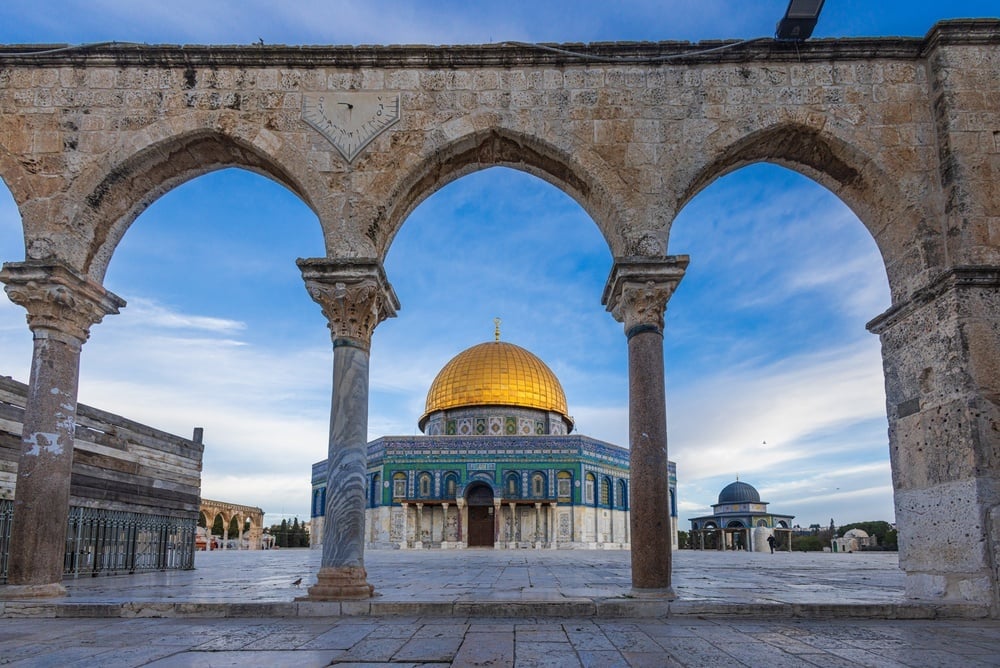
The documentation on the Old City available through UNESCO allows you to locate the Via Dolorosa, the Holy Sepulcher, and other nearby monuments. Check out this map of Jerusalem’s Old City.
Final stop: Church of the Holy Sepulcher
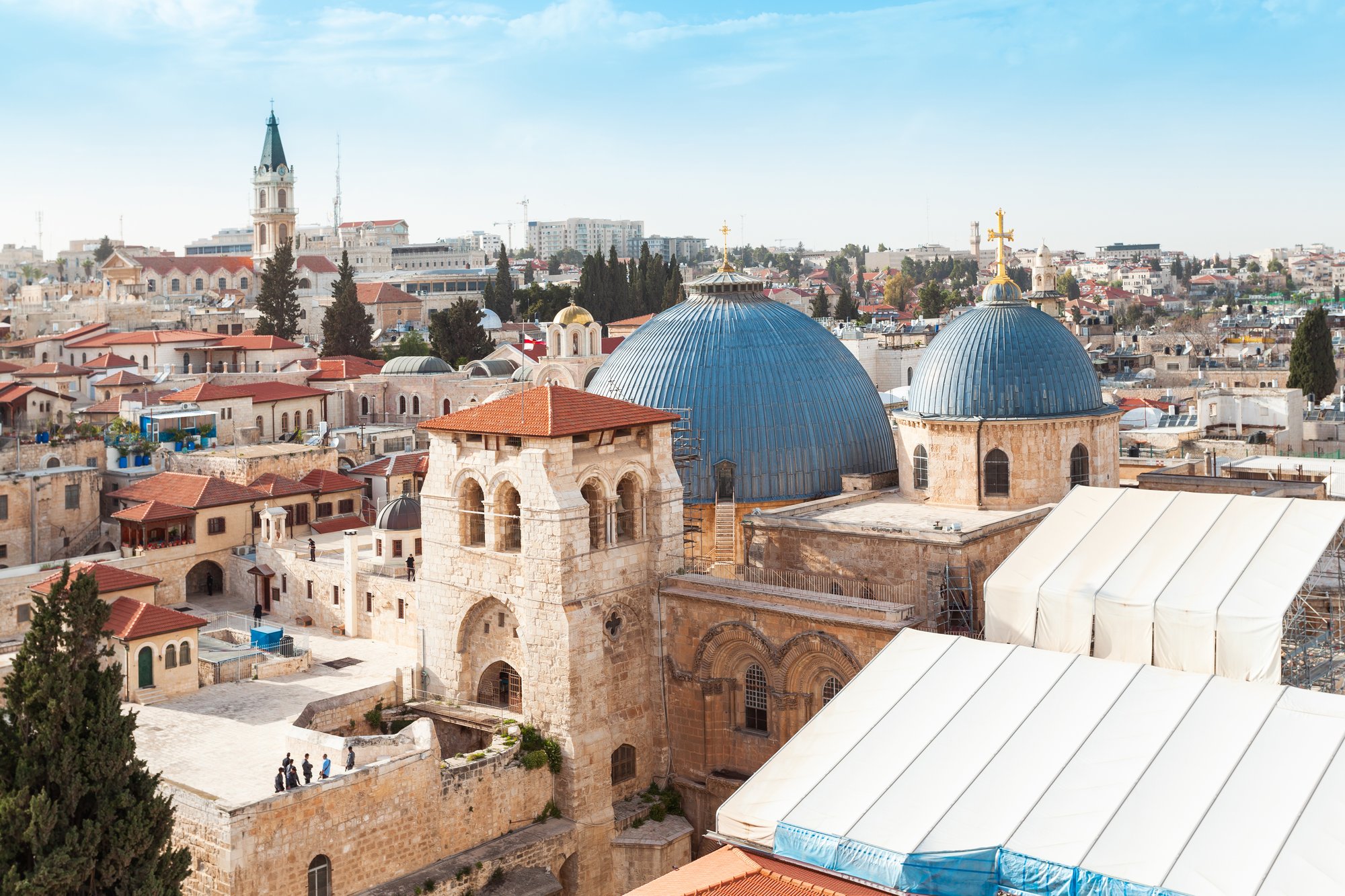
The tour ends at the Church of the Holy Sepulcher, one of the most important sites in Christianity. According to Christian tradition, the interior houses Calvary, associated with the crucifixion, and the tomb of Jesus.
Is it possible to walk the Via Dolorosa today?
Access and security conditions in Jerusalem are subject to significant changes. In March 2026, for example, the Custody of the Holy Land announced restrictions on access to the Church of the Holy Sepulcher for security reasons, although religious services continued.
Therefore, anyone planning to visit the Via Dolorosa should consult the latest official information and applicable travel recommendations before traveling.
Frequently Asked Questions About the Via Dolorosa
🔹 How many stations are there on the Via Dolorosa?
The traditional Way of the Cross has 14 stations, ending at the Church of the Holy Sepulcher.
🔹 What does Via Dolorosa mean?
It means “way of sorrow” and refers to the route traditionally associated with Jesus’ walk to his crucifixion.
🔹 Where does the Via Dolorosa begin?
The traditional route begins near the Convent of the Flagellation, in the Muslim Quarter of Jerusalem’s Old City.
🔹 Where does the Via Dolorosa end?
It ends at the Church of the Holy Sepulcher, where the final stations are located.
Plan your trip
A trip to Jerusalem requires special attention to the local context and security conditions, which can change rapidly. Before planning your route along the Via Dolorosa, always check the official travel advisories and access conditions for the sites you intend to visit.
To prepare for other unexpected travel-related situations, check out the options available at Just in Case.


5% discount by subscribing the newsletter!
Stay up to date with exclusive tips and special discounts. By subscribing to our newsletter, you get a 5% discount on your first Just in Case travel insurance*.
Campaign valid from 01/01/2025 to 31/12/2026.
 Not now
The personal data you provide will be processed for the purpose of sending marketing communications via e-mail. We remind you that you have the right to withdraw your consent at any time. Your data will never be used by third parties or by organizations outside Fidelidade. For further information on how we process your personal data, please consult our Privacy Policy.
This information does not exempt you from consulting the legally required pre-contractual and contractual information
The Just in Case Travel Insurance is provided by Fidelidade - Companhia de Seguros, S.A., with registered office at
Avenida Álvaro Pais, 14, 1600-007, Lisbon, Portugal
. Share Capital EUR 509,263,524 - registered with ASF under no. 1011.