


 PT


- 1 minute read
 Go back
Home

The Dolomites, in northern Italy, are a mountain range in the Alps known for their vertical rock faces, valleys, lakes, and peaks that rise above 3,000 meters. A UNESCO World Heritage Site since 2009, they are a year-round destination: in the summer, the hiking trails and alpine landscapes stand out; in the winter, skiing takes center stage. Marmolada, Punta Rocca, Alta Badia, and Sellaronda are among the must-see destinations on a first visit.
What you’ll find here:
The Dolomites in the summer: trails, lakes, and mountains
The Dolomites in winter: a skier’s paradise
Marmolada: the “Queen of the Dolomites”
Sellaronda, Marmolada, and Alta Badia on the same itinerary
The Dolomites: how to get there?
Frequently Asked Questions About the Dolomites
Plan your trip to the Dolomites
Where are the Dolomites?
The Dolomites stretch across northeastern Italy, spanning territories in various provinces, including Belluno, Bolzano, and Trento.
The landscape is characterized by light-colored rock massifs that contrast with forests and alpine meadows. UNESCO has designated nine areas in the Dolomites, totaling approximately 142,000 hectares and including 18 peaks over 3,000 meters.
The Dolomites: when to go?
There isn’t a single “best” time to visit the Dolomites. The choice depends mainly on the activities you plan to do.
|
Season |
Ideal for |
Conditions |
|
June through September |
Hiking and nature |
Longer days and summer chairlifts |
|
December through March |
Skiing and snow |
Peak winter sports season |
|
Spring/Fall |
Scenery and fewer crowds |
Some chairlifts and services may be closed |
The exact dates of the seasons vary by area and year. In 2026, for example, the summer lift schedules differ between Cortina d'Ampezzo, Alta Badia, Val Gardena, and Arabba/Marmolada. Therefore, always check which lifts are operating in the Dolomiti Superski area before finalizing your itinerary.
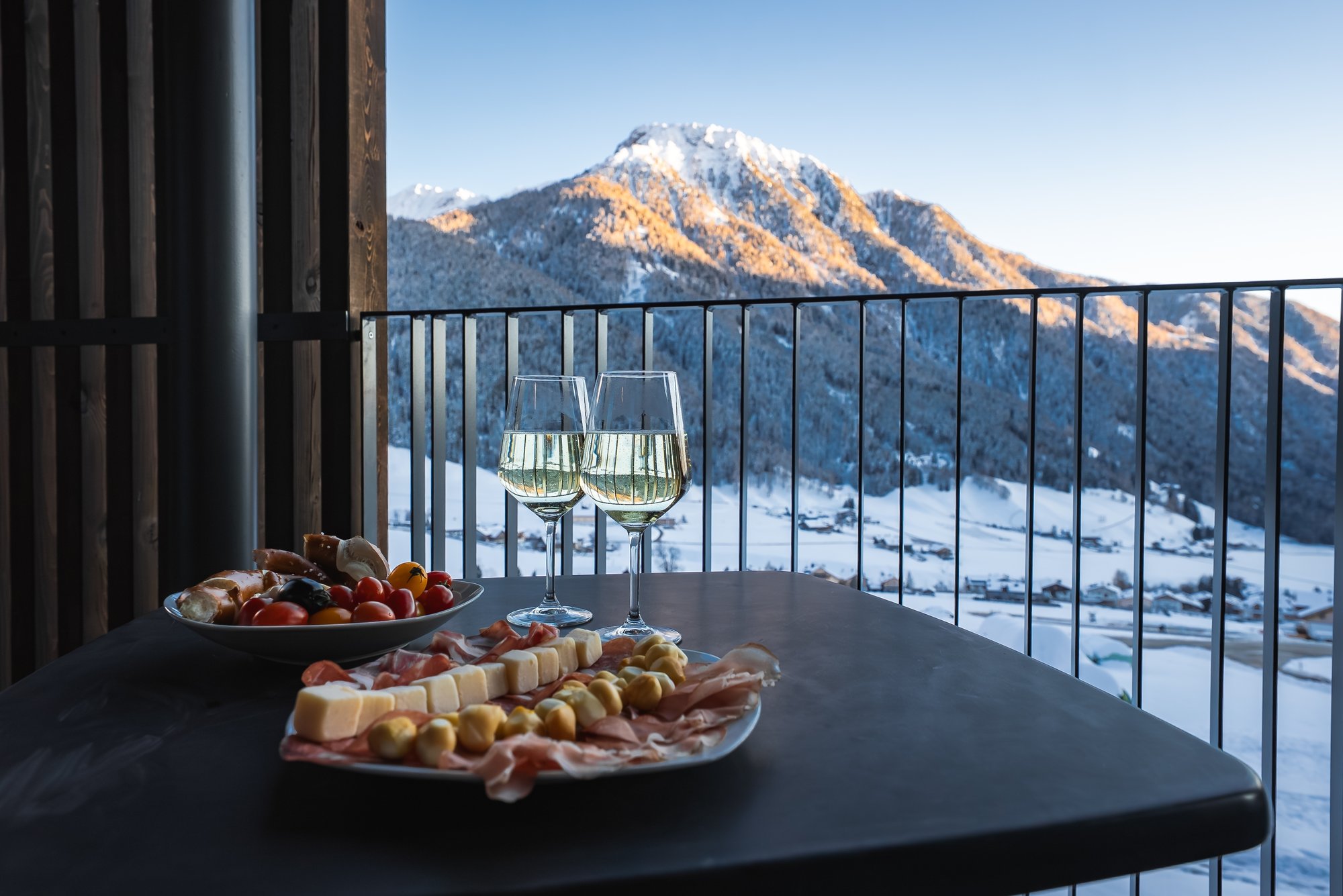
The Dolomites in summer: trails, lakes, and mountains
The Dolomites in the summer are particularly well-suited for hiking, biking, and scenic routes.
A trip can combine different base locations, such as Cortina d'Ampezzo, Val Gardena, Alta Badia, or the Arabba and Marmolada area. Instead of trying to cover the entire region, it’s usually more practical to choose two or three nearby areas.
In the summer, many of the lifts used by skiers in the winter transport hikers and cyclists to higher elevations. Their operating dates, however, vary by season.
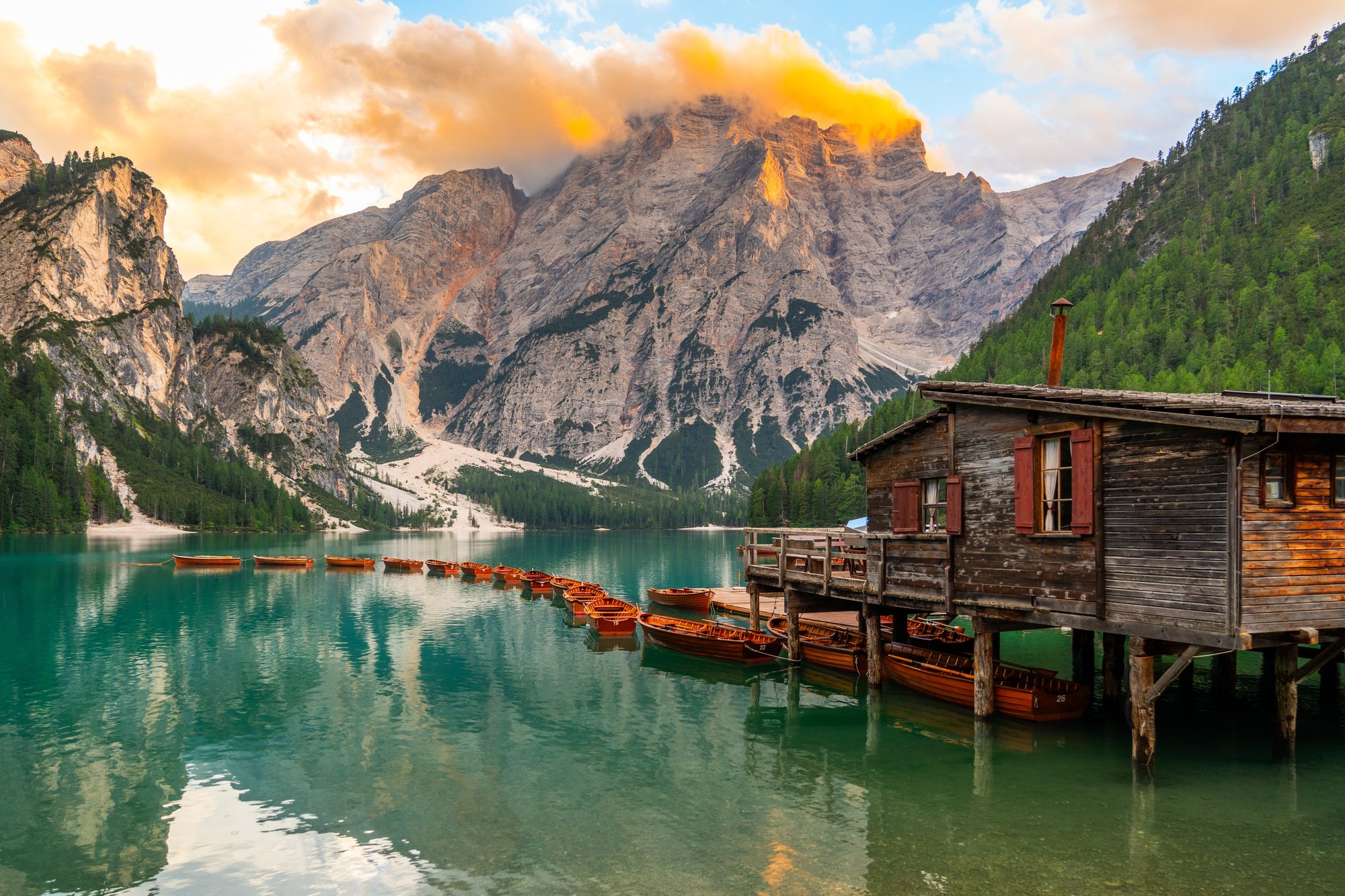
The Dolomites in winter: a skier’s paradise
In winter, the Dolomites become one of the major ski destinations in the Alps.
One of the most famous experiences is the Sellaronda, a circuit that circles the Sella massif and crosses four Ladin valleys: Val Gardena, Alta Badia, Arabba, and Val di Fassa.
According to Dolomiti Superski, the circuit is 44 km long, of which 23 km are covered on skis and 21 km by lift. It can be done in either direction and takes approximately six hours.
Marmolada: the “Queen of the Dolomites”
At 3,343 meters, the Marmolada is the highest peak in the Dolomites and one of the region’s most iconic mountains.
The Arabba/Marmolada area is connected to the vast Dolomites ski region, allowing visitors to combine high-mountain scenery with towns such as Arabba and Sottoguda. Dolomiti Superski provides up-to-date information on trails, lifts, and conditions in the area.
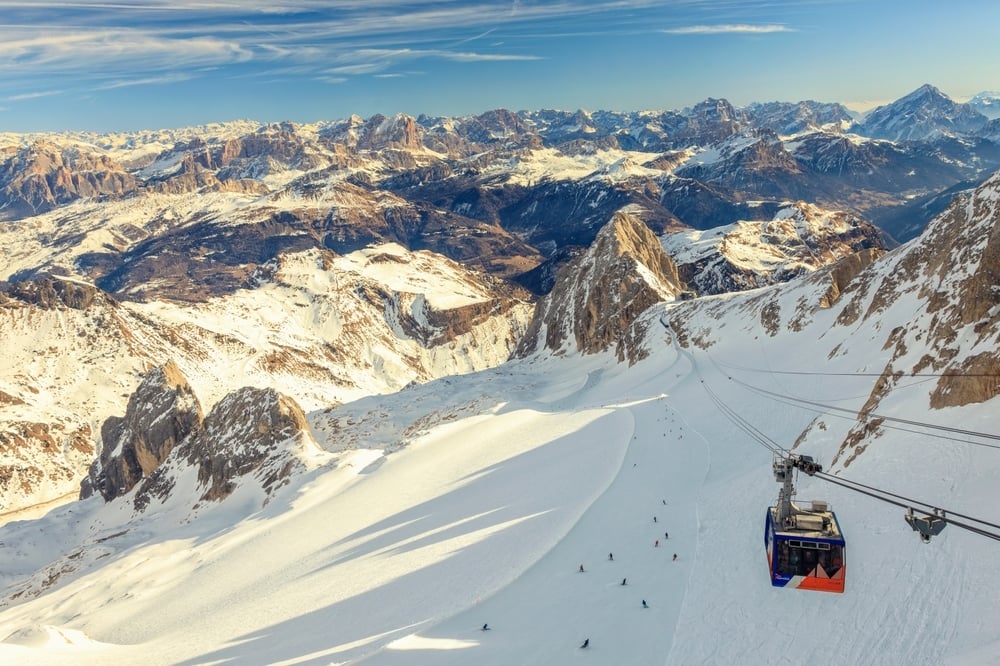
Punta Rocca
Punta Rocca, at an altitude of over 3,200 meters, is one of the most accessible spots on the Marmolada thanks to the cable car that climbs from Malga Ciapela, passing through Serauta.
In the summer of 2026, the Malga–Serauta and Serauta–Punta Rocca sections are scheduled to operate between June and September. Dates are subject to conditions and should be confirmed before your visit by checking the official status of the Marmolada’s ski lifts.
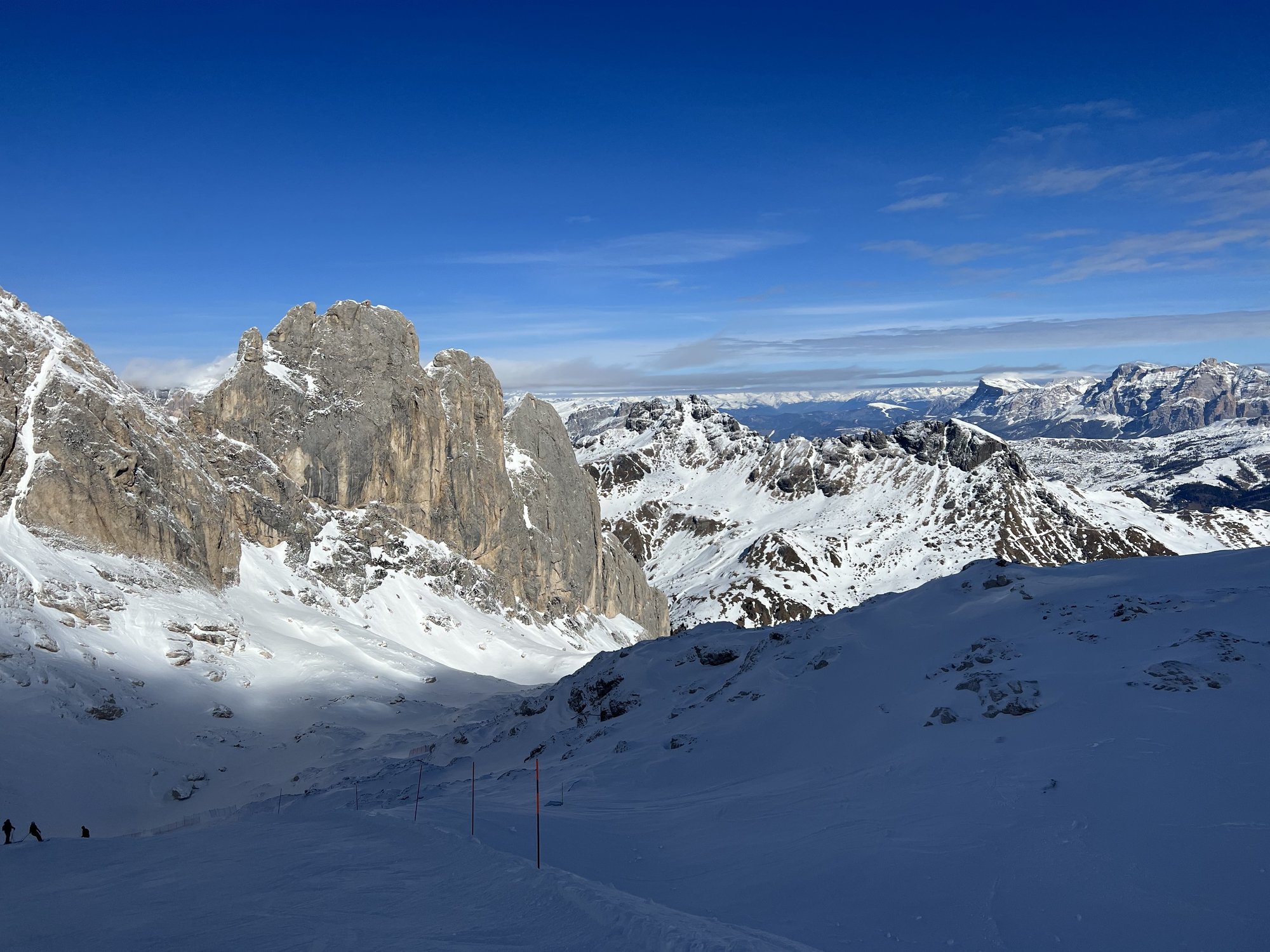
Sellaronda, Marmolada, and Alta Badia on the same itinerary
Alta Badia, Sellaronda, and Marmolada can be included in the same trip thanks to the existing connections between different areas of the Dolomites.
In winter, the Sellaronda allows you to circle the Sella Pass through the interconnected resorts. Marmolada is located in the Arabba/Marmolada area, while Alta Badia is one of the four regions crossed by the circuit.
In the summer, the situation changes: cars, buses, bicycles, and other modes of transportation become essential for connecting valleys and trailheads.
The Dolomites: how to get there?
For those arriving from Portugal, Venice, Treviso, Verona, Bolzano, and Innsbruck can serve as entry points, depending on the area you choose.
For the Marmolada area, for example, the official Dolomites website lists road connections from Venice and the Brenner corridor. By train, one option is to travel to Belluno and continue by bus. Check the official directions for getting to Marmolada before finalizing your travel plans.
Renting a car offers greater flexibility, but in winter it requires extra attention to weather conditions, proper tires, and road restrictions and closures.
Frequently Asked Questions About the Dolomites
🔹 How many days should you spend in the Dolomites?
Four to seven days will allow you to explore various areas without turning your trip into a constant series of trips from one place to another.
🔹 Is it better to visit the Dolomites in summer or winter?
It depends on your purpose. Summer is ideal for hiking and enjoying alpine scenery; winter is especially well-suited for skiing and other snow activities.
🔹 Where is Marmolada?
Marmolada is located in the Dolomites, between the provinces of Belluno and Trento, and is the highest massif in this mountain range.
🔹 What is the Sellaronda?
It is a ski circuit around the Sella massif that connects Val Gardena, Alta Badia, Arabba, and Val di Fassa.
Plan your trip to the Dolomites
A trip to the Dolomites requires some planning due to the distances, altitude, weather conditions, and seasonal operating schedules of the ski lifts. First, choose the time of year and the areas you want to visit, and build your itinerary from there.
Before you leave for Italy, check out the options available on Just in Case and make sure you’re prepared for any unexpected events.


5% discount by subscribing the newsletter!
Stay up to date with exclusive tips and special discounts. By subscribing to our newsletter, you get a 5% discount on your first Just in Case travel insurance*.
Campaign valid from 01/01/2025 to 31/12/2026.
 Not now
The personal data you provide will be processed for the purpose of sending marketing communications via e-mail. We remind you that you have the right to withdraw your consent at any time. Your data will never be used by third parties or by organizations outside Fidelidade. For further information on how we process your personal data, please consult our Privacy Policy.
This information does not exempt you from consulting the legally required pre-contractual and contractual information
The Just in Case Travel Insurance is provided by Fidelidade - Companhia de Seguros, S.A., with registered office at
Avenida Álvaro Pais, 14, 1600-007, Lisbon, Portugal
. Share Capital EUR 509,263,524 - registered with ASF under no. 1011.