


 PT


- 1 minute read
 Go back
Home

Pamukkale, in Turkey, combines two attractions in a single destination: the famous white terraces formed by calcite-rich hot springs and the ruins of the ancient Greco-Roman city of Hierapolis. Designated a UNESCO World Heritage Site since 1988, the complex includes travertine terraces, hot springs, an extensive necropolis, temples, and an imposing theater. It is also home to what is known as Cleopatra’s Pool.
What you'll find here:
Where is Pamukkale, in Turkey?
Are Pamukkale and Hierapolis the same thing?
The History of Hierapolis: A City Built Around Water
What to see in Hierapolis and Pamukkale?
How much time should you set aside for Pamukkale?
Frequently Asked Questions About Pamukkale and Hierapolis
Where is Pamukkale, in Turkey?
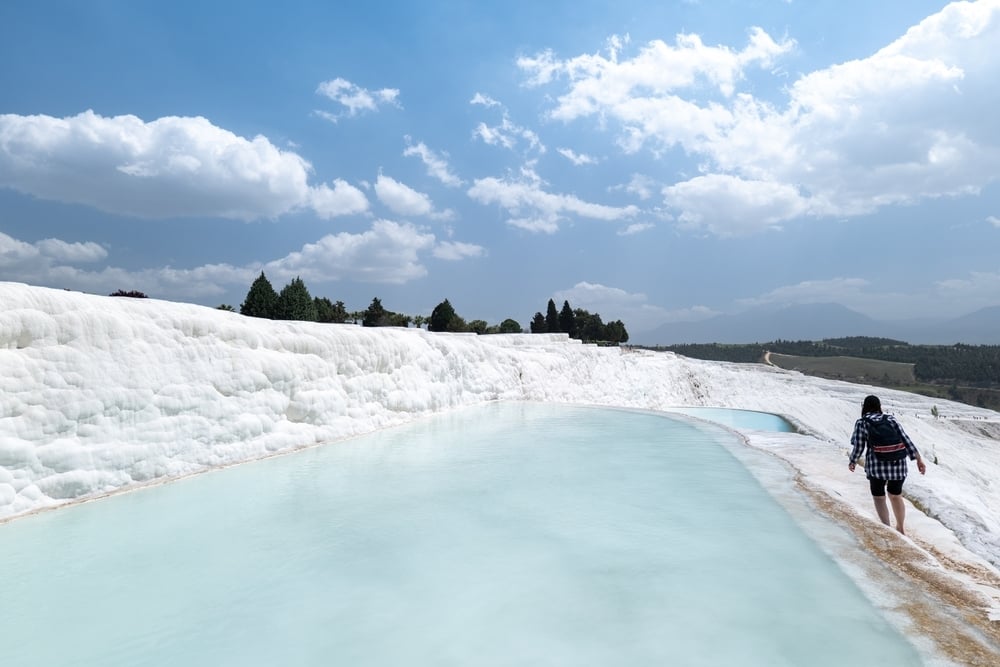
Pamukkale is located in the province of Denizli, in southwestern Turkey. The hot springs emerge from a cliff nearly 200 meters high, and over time, calcium carbonate deposits have created the characteristic petrified waterfalls and terraced pools.
The name Pamukkale itself means “cotton castle, ” a reference to the landscape’s white appearance.
Are Pamukkale and Hierapolis the same thing?
Not exactly, but they’re part of the same tour. Pamukkale refers primarily to the natural travertine formations, while Hierapolis is the ancient city built near the hot springs.
|
Pamukkale |
Hierapolis |
|
Natural formation |
Archaeological site |
|
White travertines |
Greco-Roman ruins |
|
Thermal pools |
Theater, thermal baths, and necropolis |
|
Geological landscape |
Historical heritage |
Nature and archaeology are so interdependent that UNESCO classifies Hierapolis-Pamukkale as a single World Heritage Site.
History of Hierapolis: a city built around water
The city of Hierapolis was founded by the Attalid kings of Pergamon in the late 2nd century B.C. and developed as a spa resort. It came under Roman rule in 133 B.C. and reached one of its most prosperous periods in the 2nd and 3rd centuries A.D.
After a major earthquake in A.D. 60, the city was rebuilt. Later, Hierapolis also became an important Christian center, associated with the tradition of the martyrdom of Saint Philip.
What to see in Hierapolis and Pamukkale?
The travertine terraces of Pamukkale
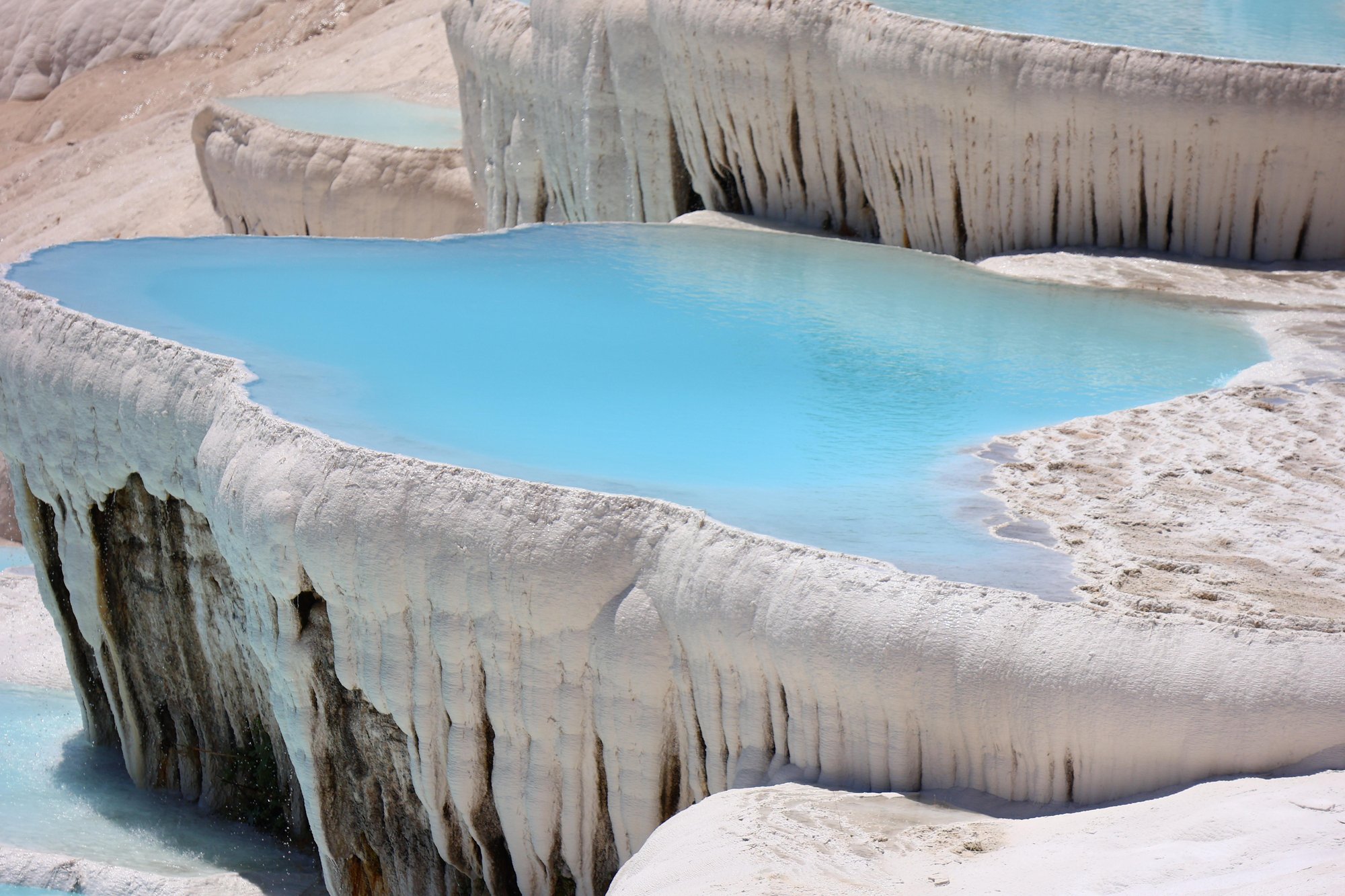
They are the destination’s most famous landmark. The calcite-rich waters have formed terraces, pools, and mineral deposits of a brilliant white.
To protect these formations, not all areas are accessible or open for swimming. UNESCO notes that there are specific areas where visitors can enter the hot springs.
Pamukkale Theater and Hierapolis
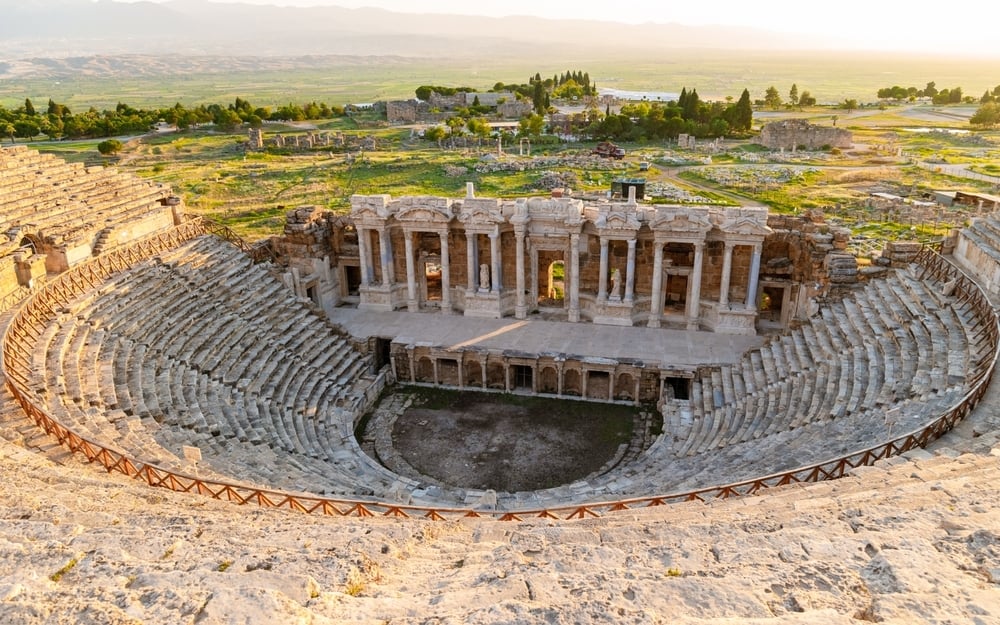
The theater at Hierapolis is one of the most impressive monuments at the archaeological site. The structure currently visible dates primarily from the Roman period and retains part of the stage’s elaborate decoration.
Necropolis of Hierapolis
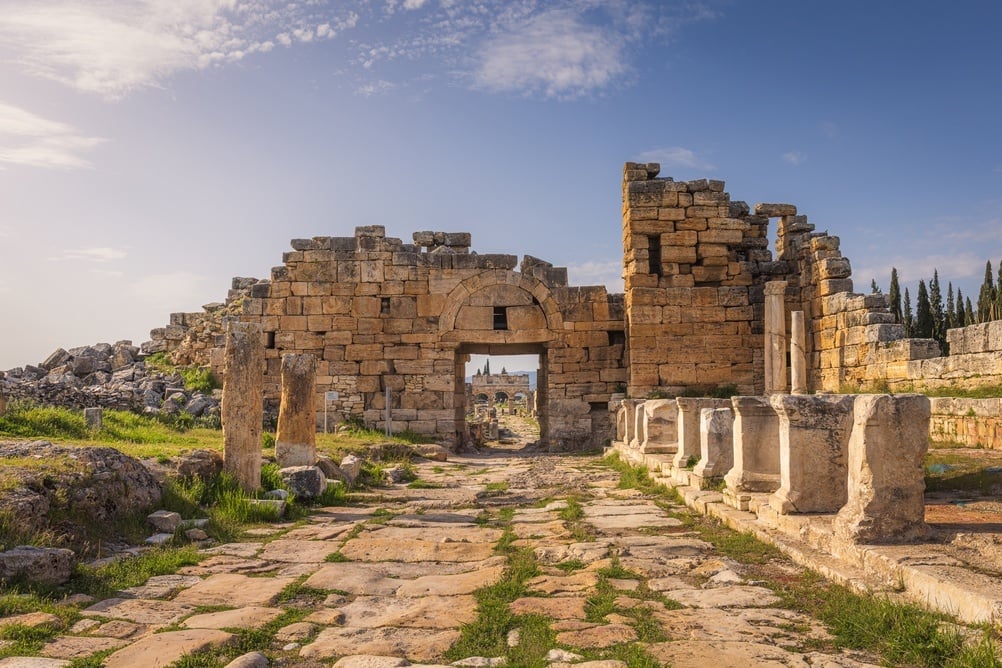
The necropolis stretches for more than 2 km and provides important insight into Greco-Roman burial practices.
Cleopatra’s Pool
The so-called Cleopatra Pool, or Ancient Pool, allows visitors to swim in a thermal area surrounded by ancient architectural features. Despite its popular name, there is no solid historical evidence that Cleopatra ever used this pool.
Official information from the Turkish Ministry of Culture and Tourism currently indicates that the Antik Havuz is open to visitors. Since access may change, always check the pool’s status and hours on the official Hierapolis-Pamukkale website before your trip.
How much time should you set aside for Pamukkale?
To see the travertines and the main monuments of Hierapolis without rushing too much, set aside at least half a day. Those who wish to explore the necropolis, the museum, the theater, and the thermal pool will benefit from a longer visit.
The Hierapolis Archaeological Museum, housed in an ancient Roman bath complex, provides context for the ruins and displays artifacts from Hierapolis and other archaeological sites in the region.
Frequently Asked Questions About Pamukkale and Hierapolis
🔹 Where is Pamukkale?
Pamukkale is located in the province of Denizli, in southwestern Turkey.
🔹 What are the White Pools of Pamukkale?
They are terraces of travertine formed by the deposition of calcium carbonate carried by the hot springs.
🔹 What was Hierapolis?
It was an ancient spa town founded during the Hellenistic period that later flourished under Roman rule.
🔹 Is Cleopatra’s Pool open?
The archaeological site’s official website currently lists the Ancient Pool as open. It’s a good idea to confirm this information before your visit, as access may change.
Plan your trip to Pamukkale
From the travertine terraces of Pamukkale to the ruins of Hierapolis, this is a destination where nature and history come together in one place. If you’re planning to include it in your Turkey itinerary, check out the options available on Just in Case and prepare for the unexpected as well.


5% discount by subscribing the newsletter!
Stay up to date with exclusive tips and special discounts. By subscribing to our newsletter, you get a 5% discount on your first Just in Case travel insurance*.
Campaign valid from 01/01/2025 to 31/12/2026.
 Not now
The personal data you provide will be processed for the purpose of sending marketing communications via e-mail. We remind you that you have the right to withdraw your consent at any time. Your data will never be used by third parties or by organizations outside Fidelidade. For further information on how we process your personal data, please consult our Privacy Policy.
This information does not exempt you from consulting the legally required pre-contractual and contractual information
The Just in Case Travel Insurance is provided by Fidelidade - Companhia de Seguros, S.A., with registered office at
Avenida Álvaro Pais, 14, 1600-007, Lisbon, Portugal
. Share Capital EUR 509,263,524 - registered with ASF under no. 1011.