


 PT


- 1 minute read
 Go back
Home

The Ngorongoro Crater, in northern Tanzania, is the world’s largest intact, unfilled volcanic caldera and one of Africa’s most important wildlife viewing sites. Formed by the collapse of a massive volcano about 2.5 million years ago, it covers approximately 260 km² and is home to more than 25,000 animals. It is part of the Ngorongoro Conservation Area, designated a UNESCO World Heritage Site.
What you'll find here:
Where is the Ngorongoro Crater?
Ngorongoro Crater or Volcano: how was it formed?
Why is Ngorongoro known as the “Eden of Africa”?
What animals can you see on a safari in Ngorongoro?
What is a safari in the Ngorongoro Crater like?
Is Ngorongoro a UNESCO World Heritage Site?
Frequently Asked Questions About the Ngorongoro Crater
Where is the Ngorongoro Crater?
The Ngorongoro Crater is located in northern Tanzania, within the Ngorongoro Conservation Area, between the Serengeti and the eastern branch of the Great Rift Valley.
The protected area covers approximately 8,094 km² and features plains, savanna, forests, volcanic craters, and important archaeological sites.
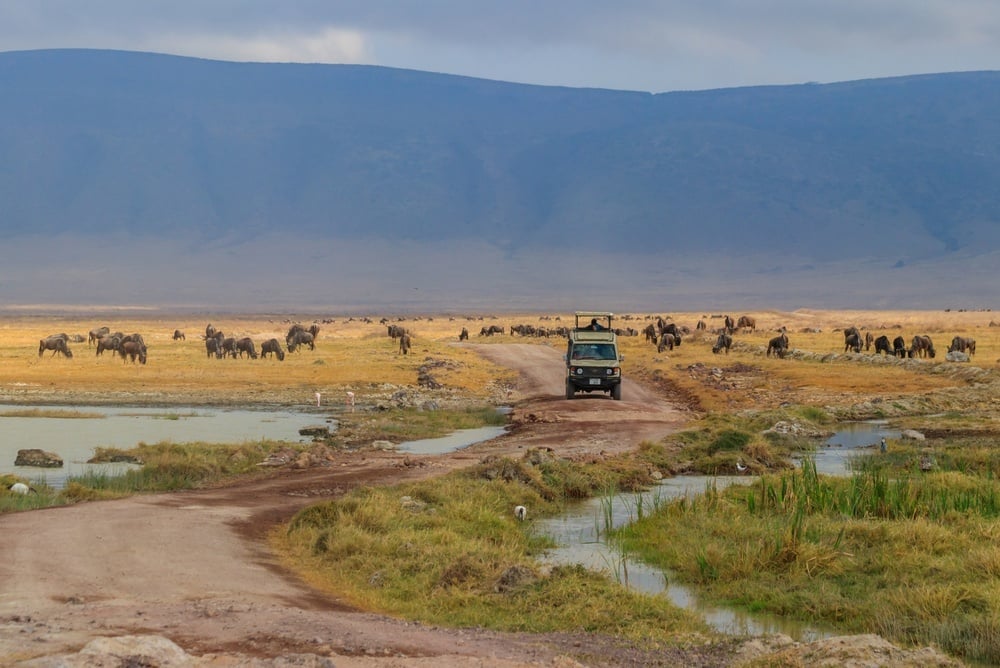
Ngorongoro Crater or Volcano: how was it formed?
Ngorongoro is not currently an active volcano. The landscape we see today was formed by the collapse of a massive Ngorongoro volcano.
According to the Ngorongoro-Lengai UNESCO Global Geopark, the collapse occurred approximately 2.5 million years ago. The current caldera is about 20 km in diameter and approximately 610 meters deep.
|
Feature |
Ngorongoro Crater |
|
Formation |
Volcanic caldera |
|
Approximate age |
2.5 million years |
|
Area |
About 260 km² |
|
Diameter |
About 20 km |
|
Depth |
About 610 meters |
|
Fauna |
More than 25,000 animals |
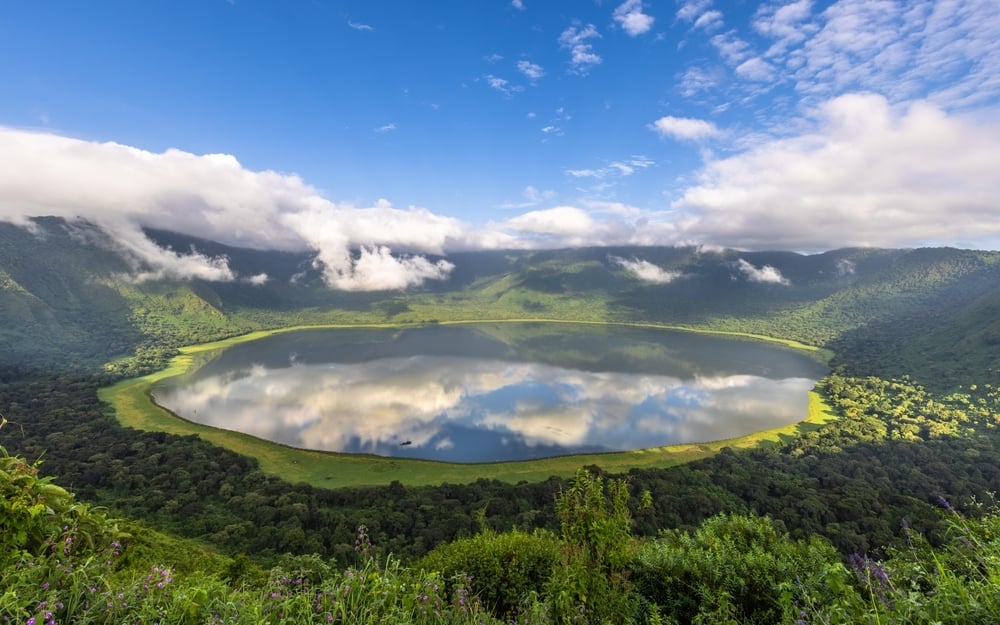
Why is Ngorongoro known as the “Eden of Africa”?
The term “Ngorongoro Eden” refers to the extraordinary concentration of animals in a relatively small area. The authority responsible for the geopark itself describes the crater as “Africa’s Garden of Eden.”
UNESCO highlights the region’s high density of wildlife and the presence of endangered species, including the black rhinoceros. The Conservation Area is also part of the Serengeti ecosystem, through which the great annual migration of wildebeests, zebras, and gazelles passes. You can learn about the protected natural and cultural values on Ngorongoro’s official UNESCO page.
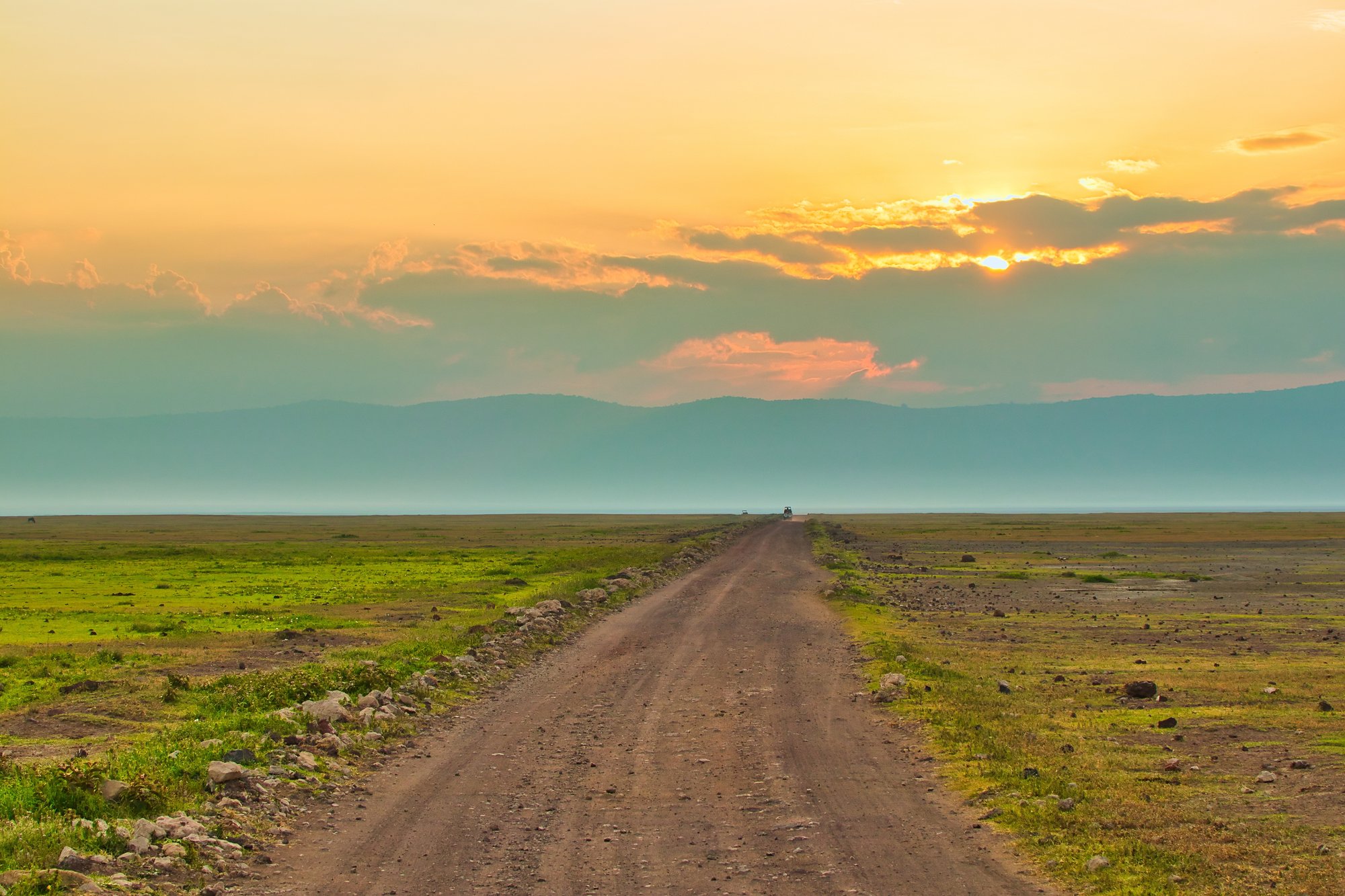
What animals can you see on a safari in Ngorongoro?
A safari in Ngorongoro allows you to search for the so-called Big Five, although no sightings are guaranteed.
The Big Five
The following animals can be found in the Conservation Area:
• lions;
• elephants;
• buffalo;
• rhinos;
• leopards.
You can also find wildebeests, zebras, hippos, hyenas, gazelles, and numerous species of birds. Local authorities estimate that there are more than 25,000 large animals in the crater.
What is a safari in the Ngorongoro Crater like?
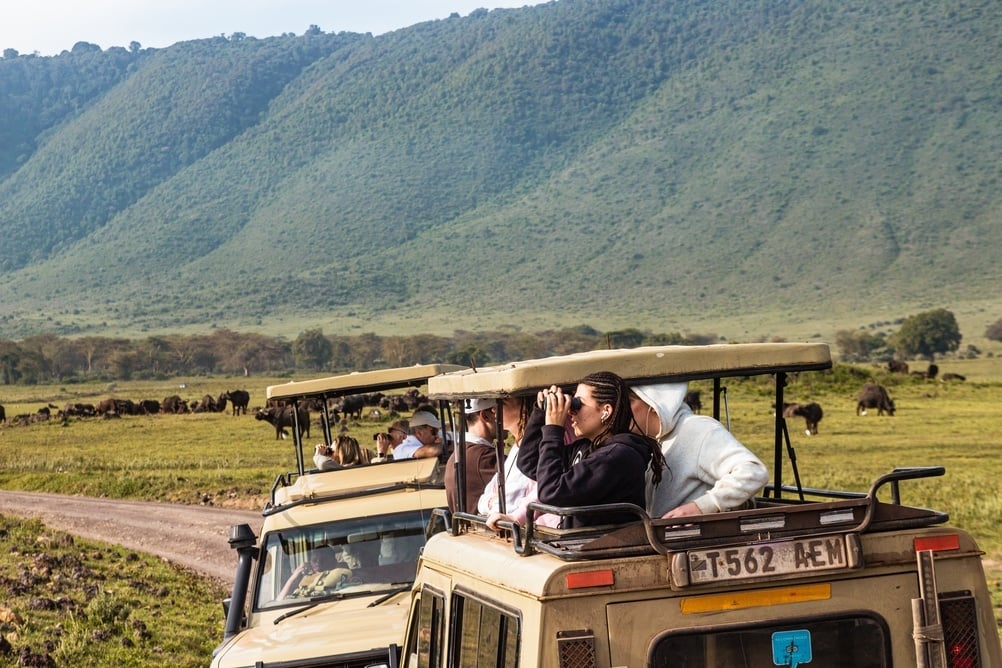
A game drive is one of the best ways to explore the crater. The descent begins in the highlands and leads to the bottom of the caldera, where different habitats—including grasslands, wetlands, and woodlands—support a high diversity of wildlife.
The Ngorongoro Conservation Area Authority identifies the game drive in the crater as one of the most popular tourist activities in the area.
Ngorongoro can also be incorporated into a broader safari itinerary through northern Tanzania, in combination with the Serengeti.
Is Ngorongoro a UNESCO World Heritage Site?
Yes. The Ngorongoro Conservation Area was inscribed on the World Heritage List in 1979 for its natural values and received additional recognition for its cultural values in 2010.
In addition to its biodiversity, the region preserves key evidence of human evolution. Laetoli contains hominid footprints dating back approximately 3.6 million years, while Olduvai Gorge holds an important paleoanthropological record.
Frequently Asked Questions About the Ngorongoro Crater
🔹 Where is the Ngorongoro Crater?
It is located in northern Tanzania, within the Ngorongoro Conservation Area.
🔹 Is the Ngorongoro Crater a volcano?
It is a caldera formed by the collapse of a large ancient volcano about 2.5 million years ago.
🔹 What animals live in Ngorongoro?
Lions, elephants, buffalo, rhinos, leopards, zebras, wildebeests, hippos, hyenas, and many other species.
🔹 Is it possible to go on a safari in Ngorongoro?
Yes. Vehicle safaris inside the crater are among the region’s top experiences.
Plan your safari in Tanzania
From the descent into the Ngorongoro Crater to the grand safaris of the Serengeti, a trip through Tanzania involves travel and experiences in very different environments. Before you leave, check out the options available at Just in Case and be prepared for any unexpected events during your trip.


5% discount by subscribing the newsletter!
Stay up to date with exclusive tips and special discounts. By subscribing to our newsletter, you get a 5% discount on your first Just in Case travel insurance*.
Campaign valid from 01/01/2025 to 31/12/2026.
 Not now
The personal data you provide will be processed for the purpose of sending marketing communications via e-mail. We remind you that you have the right to withdraw your consent at any time. Your data will never be used by third parties or by organizations outside Fidelidade. For further information on how we process your personal data, please consult our Privacy Policy.
This information does not exempt you from consulting the legally required pre-contractual and contractual information
The Just in Case Travel Insurance is provided by Fidelidade - Companhia de Seguros, S.A., with registered office at
Avenida Álvaro Pais, 14, 1600-007, Lisbon, Portugal
. Share Capital EUR 509,263,524 - registered with ASF under no. 1011.