


 PT
PT


- 1 minute read
 Go back
Home
Go back
Home

The Lighthouse of Alexandria, also known as the Pharos Lighthouse, was one of the Seven Wonders of the Ancient World and one of the greatest engineering feats of antiquity. Erected on the island of Pharos, off Alexandria in Egypt, it played a crucial role in navigation and trade in the Mediterranean Sea. This article explores the history, construction and legacy of the Lighthouse of Alexandria, one of the most famous structures in the ancient world.
What you'll find here:
What was the Lighthouse of Alexandria?
History and construction of the Lighthouse of Alexandria
Legacy and impact of the Lighthouse of Alexandria
The Lighthouse of Alexandria in art and culture
The Lighthouse of Alexandria today
Frequently asked questions about the Lighthouse of Alexandria
What was the Lighthouse of Alexandria?
The Lighthouse of Alexandria was a monumental tower built at the beginning of the 3rd century BC, during the reign of Ptolemy II Philadelphus, to serve as a reference point for sailors arriving at the port of Alexandria. About 100 meters high, it was equipped with a large light source and is considered one of the first and most important lighthouses in history.
Location: The lighthouse was located on the small island of Pharos, connected to the city of Alexandria by a bridge or dyke known as the Bridge of Pharos.
Function: Its main function was to guide sailors and ensure the safety of vessels arriving at the busy port of Alexandria, one of the most important in the ancient world.

History and construction of the Lighthouse of Alexandria
The construction of the Lighthouse of Alexandria was promoted by Ptolemy II Philadelphus and attributed to the Greek architect Sostratus of Cnidus. The lighthouse was completed around 280 BC and its construction required advanced knowledge of engineering, architecture and lighting techniques. It quickly became a technical and symbolic benchmark in the Mediterranean region.
Architectural features
According to ancient descriptions, the lighthouse consisted of three main levels:
-
Base: A massive block of stone with a square plan, forming a large platform where navigators could orient themselves.
-
Middle body: An octagonal or cylindrical tower (depending on the source), made of marble or carved stone, which rose from the base. At the top, some descriptions mention a monumental statue of Zeus or Poseidon.
-
Lantern: At the top was the structure where the fire burned, whose light was reinforced by large metallic or polished mirrors, projecting the glow a long distance over the sea.
Destruction of the lighthouse
The Lighthouse of Alexandria was seriously damaged by a series of earthquakes between the 10th and 14th centuries. Although it stood for many centuries, the tremors eventually caused the structure to collapse almost completely. Today only traces remain, largely submerged, in the vicinity of the old site.

Legacy and impact of the Lighthouse of Alexandria
The Lighthouse of Alexandria was considered one of the Seven Wonders of the Ancient World thanks to its magnificence and its vital role in Mediterranean navigation. It symbolized the technological and scientific advancement of the time and became an icon of Alexandria, then one of the great cultural centers of the Hellenistic world.
Its cultural impact was enormous: it served as a model for later lighthouses and inspired the term "lighthouse", used today to designate similar structures in several languages. The concept of a luminous tower as a sign of maritime orientation is largely based on the example of Pharos.
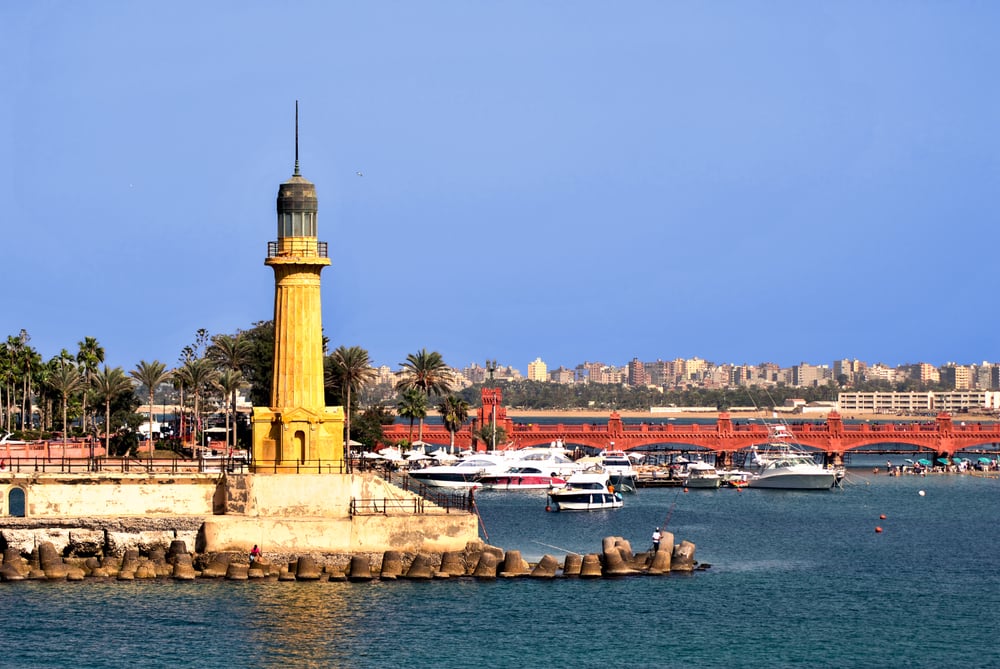
The Lighthouse of Alexandria in art and culture
Over the centuries, the Lighthouse of Alexandria has inspired many artistic and literary representations. Paintings, engravings and descriptions in ancient chronicles attempt to reconstruct its appearance, since no original drawing has survived.
In many of these representations, the lighthouse appears as a symbol of light, guidance and human progress, linking the imagery of the ancient world to the modern idea of knowledge and discovery. Its image continues to be used as a metaphor for guidance and reference.
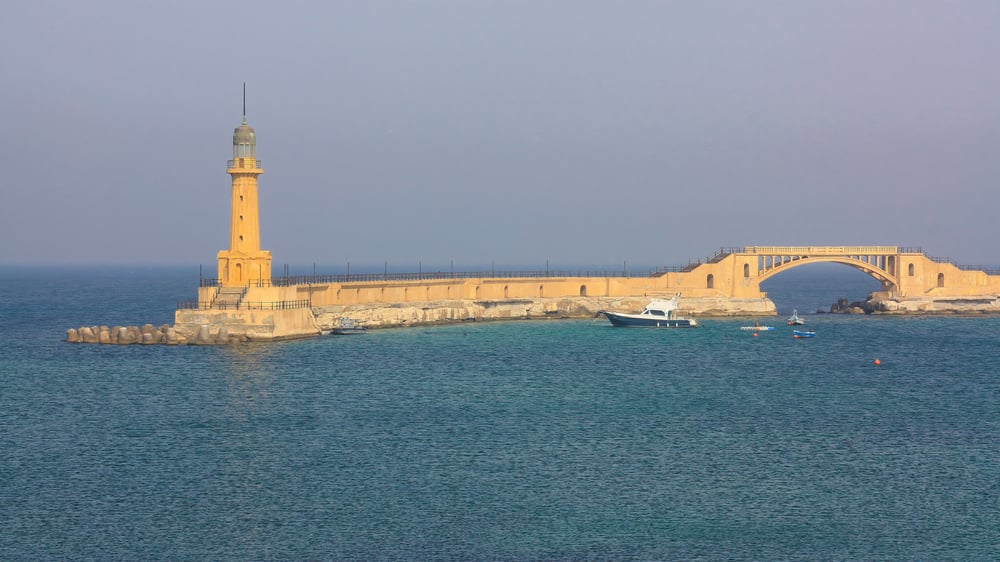
The Lighthouse of Alexandria today
Today, the site where the Lighthouse of Alexandria stood is partially submerged, and some of its remains can be seen in underwater archaeological contexts. Pieces and finds associated with the lighthouse are on display in museums in Alexandria and are part of study and preservation projects.
Even though it has disappeared, the Lighthouse of Alexandria remains one of the best known and most studied ancient wonders, and its legacy lives on in the architecture and function of modern lighthouses around the world.
Frequently asked questions about the Lighthouse of Alexandria
🔹 Where was the Lighthouse of Alexandria located?
The Lighthouse of Alexandria was on the island of Pharos, connected to the city of Alexandria in Egypt, at the entrance to the old port.
🔹 Who built the Lighthouse of Alexandria?
The construction was promoted by Ptolemy II Philadelphus and attributed to the Greek architect Sostratus of Cnidus.
🔹 What happened to the Lighthouse of Alexandria?
The lighthouse was gradually destroyed by a series of earthquakes between the 9th and 14th centuries. Today there are only vestiges, largely submerged, in the coastal area of Alexandria.
Preparing for your trip to the Alexandria Lighthouse begins long before you explore the submerged ruins and millennia-old heritage of this ancient wonder, and that includes making sure your journey is as safe as it is enriching. With Just in Case, you can travel protected without spending more than you need to, thanks to the Tailor-Made Plan, where you choose only the essential cover for your adventure in Egypt. Access our webapp, create a tailor-made insurance plan and do a Just in Case before embarking on an unforgettable journey through the history of the ancient world.


5% discount by subscribing the newsletter!
Stay up to date with exclusive tips and special discounts. By subscribing to our newsletter, you get a 5% discount on your first Just in Case travel insurance*.
Campaign valid from 01/01/2025 to 31/12/2026.
 Not now
The personal data you provide will be processed for the purpose of sending marketing communications via e-mail. We remind you that you have the right to withdraw your consent at any time. Your data will never be used by third parties or by organizations outside Fidelidade. For further information on how we process your personal data, please consult our Privacy Policy.
Not now
The personal data you provide will be processed for the purpose of sending marketing communications via e-mail. We remind you that you have the right to withdraw your consent at any time. Your data will never be used by third parties or by organizations outside Fidelidade. For further information on how we process your personal data, please consult our Privacy Policy. This information does not exempt you from consulting the legally required pre-contractual and contractual information
The Just in Case Travel Insurance is provided by Fidelidade - Companhia de Seguros, S.A., with registered office at
Avenida Álvaro Pais, 14, 1600-007, Lisbon, Portugal
. Share Capital EUR 509,263,524 - registered with ASF under no. 1011.