


 PT


- 1 minute read
 Go back
Home

Abu Simbel is an archaeological complex in southern Egypt, on the shores of Lake Nasser, consisting of two temples carved into the rock during the reign of Ramses II in the 13th century B.C. The complex is famous for the four colossal statues of the pharaoh, for the solar lighting phenomenon inside the Great Temple, and for having been dismantled and rebuilt on higher ground to escape the waters of the Aswan Dam.
It is one of those places where history seems to defy human scale - both because of the original construction and because of the extraordinary operation that allowed it to be preserved thousands of years later.
What you’ll find here:
The History of Abu Simbel and the Operation That Saved the Temples
The Solar Phenomenon at Abu Simbel
Abu Simbel in an Egypt That Is Once Again Breaking Tourism Records
Abu Simbel on an Egypt itinerary
Frequently Asked Questions About Abu Simbel
Travel to Egypt Prepared for the Unexpected
Where is Abu Simbel?
Abu Simbel is located in southern Egypt, in the Nubia region, near the border with Sudan and about 280 km south of Aswan, according to UNESCO.
The remote location is part of the experience. The complex is currently situated on the shores of Lake Nasser.
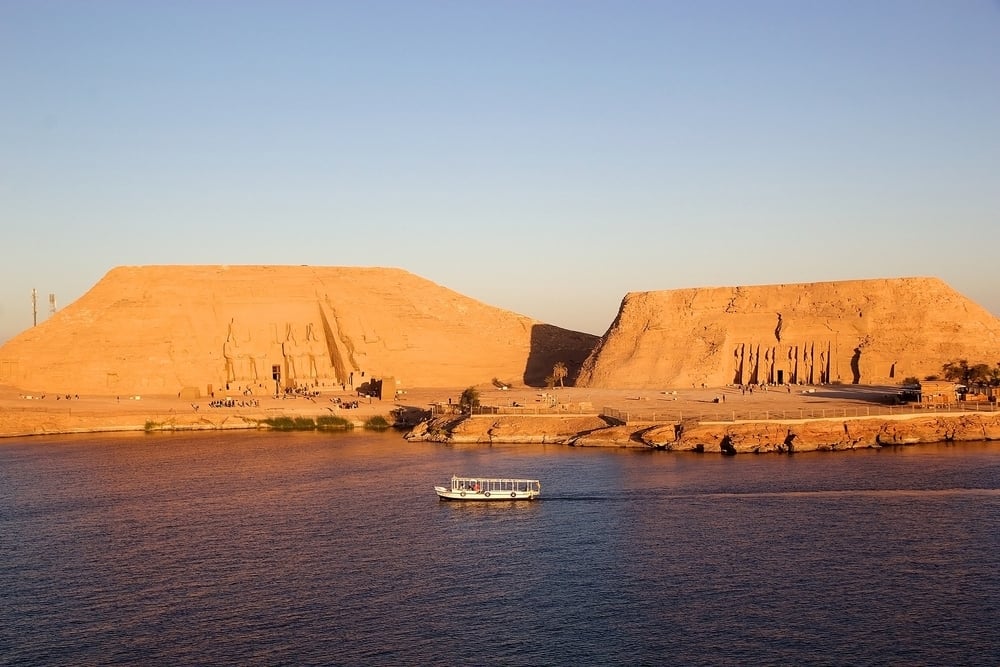
The two temples of Abu Simbel
Abu Simbel is not just one temple. The complex comprises two monumental structures.
|
Monument |
Dedicated to |
Main attraction |
|
Great Temple |
Ramses II and Egyptian deities |
Four Colossal Statues of Ramses II |
|
Small Temple |
Queen Nefertari and the goddess Hathor |
Facade dedicated to the royal couple |
The Great Temple of Ramses II
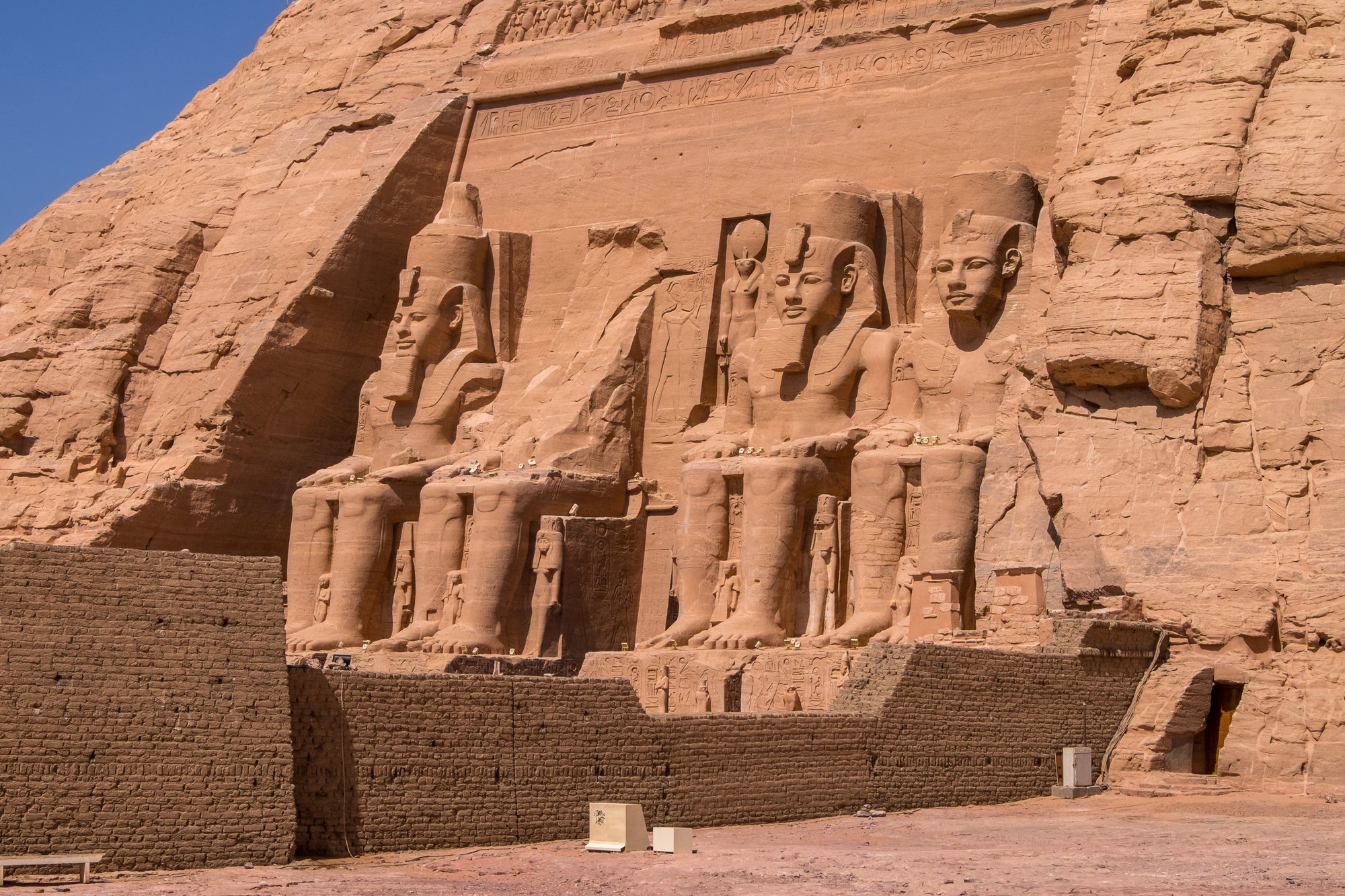
The Temple of Ramses II at Abu Simbel is the landmark that has made the complex world-famous. The façade features four statues of the pharaoh, each about 21 meters tall.
Inside, there are chambers, pillars, reliefs, and depictions associated with the power of Ramses II.
The Temple of Nefertari
Next to it is a smaller temple dedicated to Queen Nefertari and the goddess Hathor.
The importance attributed to the queen makes it particularly interesting in the context of royal architecture in Ancient Egypt.
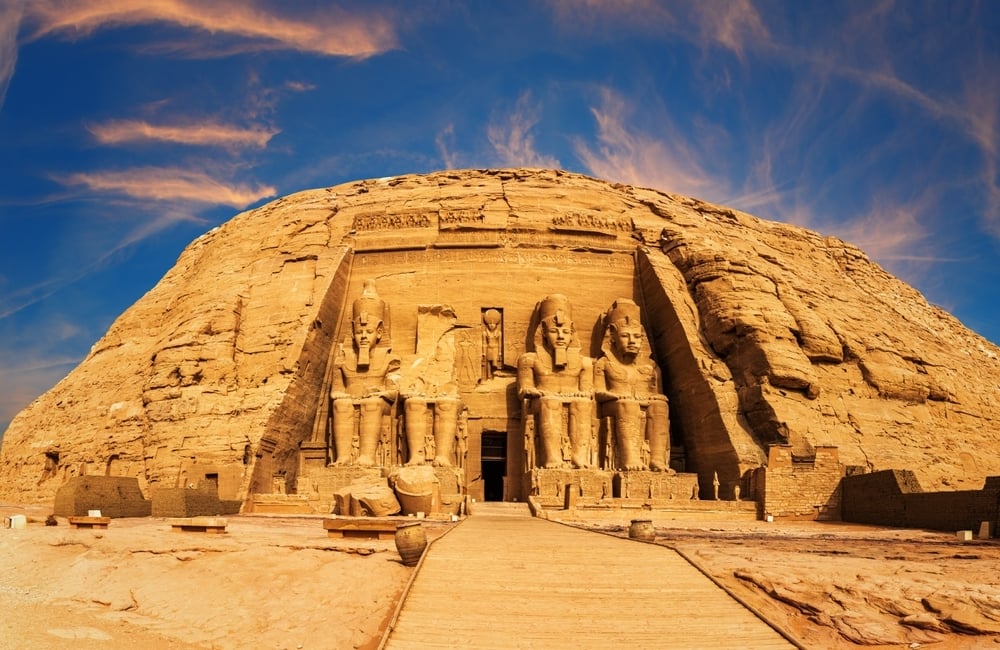
The history of Abu Simbel and the operation that saved the temples
The modern history of Abu Simbel is almost as extraordinary as its origins.
The construction of the Aswan Dam threatened to submerge several monuments in ancient Nubia. In 1960, UNESCO launched an international campaign to preserve this heritage.
At Abu Simbel, the temples were cut into more than a thousand blocks and rebuilt on an artificial platform located 64 meters above and 180 meters inland from their original location. The operation was completed in 1968, becoming a global benchmark in heritage preservation. UNESCO explains the Abu Simbel rescue operation in detail.
Today, Abu Simbel is part ofthe Nubian Monuments from Abu Simbel to Philae, designated as a UNESCO World Heritage Site since 1979.
The solar phenomenon at Abu Simbel
There are two particularly special times to visit the temple.
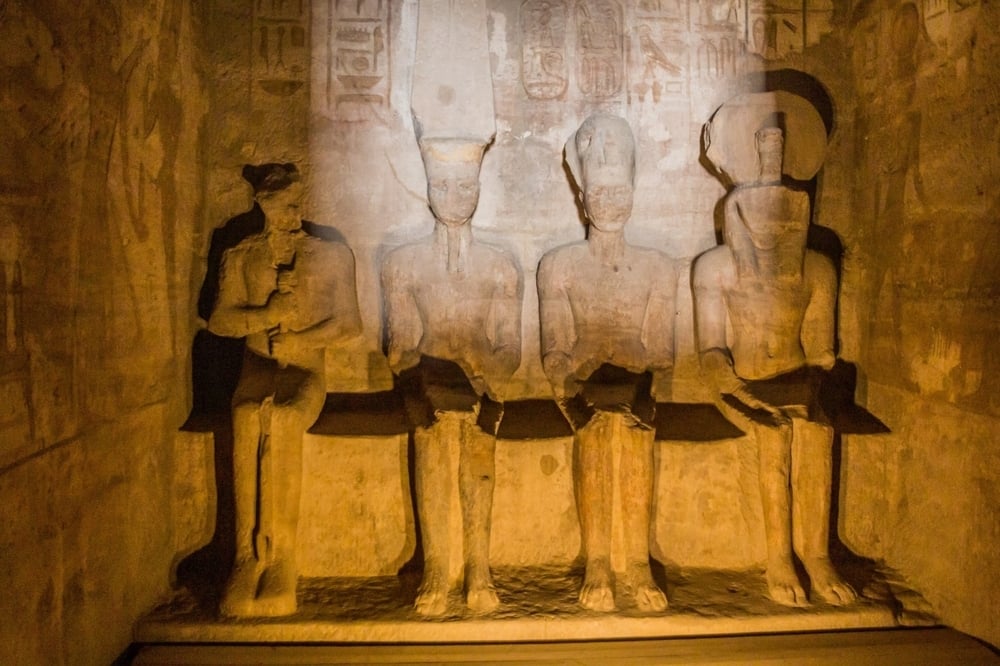
On February 22 and October 22, the first rays of the sun penetrate the Great Temple and illuminate the statues in the inner sanctuary.
In October 2025, the phenomenon lasted about 22 minutes and attracted approximately 4,000 visitors.
It is a striking demonstration of the relationship between architecture, astronomy, and religion in Ancient Egypt.
How to visit Abu Simbel?
Most travelers reach Abu Simbel from Aswan.
The main options are:
• an organized tour by road;
• private transportation;
• flight to Abu Simbel;
• itineraries that include Abu Simbel as part of a broader tour of Egypt.
If you’re planning to travel by road, be prepared for a long drive and a very early start to the day.
Abu Simbel in an Egypt that’s once again breaking tourism records
Interest in Egypt’s cultural heritage continues to grow. Egypt welcomed approximately 19 million international tourists in 2025, a 21% increase over the previous year, according to official data released by the country.
Abu Simbel offers an experience quite different from Cairo or the Pyramids of Giza: here, the journey takes you to the heart of ancient Nubia.
Abu Simbel on an Egypt Itinerary
A trip to Abu Simbel can be part of a more comprehensive tour of the country. To better understand the legacy of Ancient Egypt, it’s also worth visiting the Pyramids of Egypt and discovering the Seven Wonders of the Ancient World.
The historical importance of Abu Simbel is internationally recognized: the complex is part ofthe Nubian Monuments from Abu Simbel to Philae, designated as a UNESCO World Heritage Site.
Before you leave, also check whether you need to schedule a travel health consultation, especially if your itinerary includes different regions or an extended stay.
Frequently Asked Questions About Abu Simbel
🔹 Where is Abu Simbel?
It is located in southern Egypt, in the Nubia region, about 280 km from Aswan and near the border with Sudan.
🔹 Who built the Temple of Abu Simbel?
The temples were built by order of Pharaoh Ramses II in the 13th century B.C.
🔹 Was Abu Simbel moved?
Yes. The complex was dismantled and rebuilt on higher ground during a major international campaign coordinated by UNESCO.
🔹 When does the solar phenomenon occur at Abu Simbel?
The solar alignment occurs on February 22 and October 22.
🔹 Is Abu Simbel a UNESCO World Heritage Site?
Yes. It is part of the Nubian Monuments from Abu Simbel to Philae, inscribed on the World Heritage List in 1979.
Travel to Egypt prepared for the unexpected
Between flights, long trips, and an itinerary full of places to discover, a trip to Egypt deserves careful planning. Confirm your travel details in advance and leave room for any changes.
Before you set off to explore Abu Simbel, check out Just in Case and prepare for the unexpected.


5% discount by subscribing the newsletter!
Stay up to date with exclusive tips and special discounts. By subscribing to our newsletter, you get a 5% discount on your first Just in Case travel insurance*.
Campaign valid from 01/01/2025 to 31/12/2026.
 Not now
The personal data you provide will be processed for the purpose of sending marketing communications via e-mail. We remind you that you have the right to withdraw your consent at any time. Your data will never be used by third parties or by organizations outside Fidelidade. For further information on how we process your personal data, please consult our Privacy Policy.
This information does not exempt you from consulting the legally required pre-contractual and contractual information
The Just in Case Travel Insurance is provided by Fidelidade - Companhia de Seguros, S.A., with registered office at
Avenida Álvaro Pais, 14, 1600-007, Lisbon, Portugal
. Share Capital EUR 509,263,524 - registered with ASF under no. 1011.