


 PT
PT


- 1 minute read
 Go back
Home
Go back
Home

One of the first questions anyone who dreams of this spectacle asks is simple: where can you see the aurora borealis? The aurora borealis is a natural phenomenon visible only in certain regions of the planet and under very specific conditions. Knowing where it appears and where the best places are is essential to increase your chances of seeing it.
What you'll find here:
Where does the Northern Lights occur?
Where to see the Northern Lights in the world
Where to see the Northern Lights "best"?
Frequently asked questions about the 7 wonders of the ancient world
Where does the Northern Lights occur?
The aurora borealis occurs in the northern hemisphere, in areas close to the Arctic Circle. It appears when solar particles interact with the Earth's atmosphere, producing colored lights in the night sky. In practice, it is more frequent in northern European countries, parts of North America and regions close to the Arctic.
Where to see the Northern Lights in the world
If you're looking for places to see the aurora borealis, these are the classic destinations where the phenomenon appears most frequently.
Norway
One of the most famous countries for seeing auroras, especially in the north. Cities and regions such as Tromsø, the Lofoten Islands and Alta are references for those who want good odds combined with good tourist infrastructure.
Finland
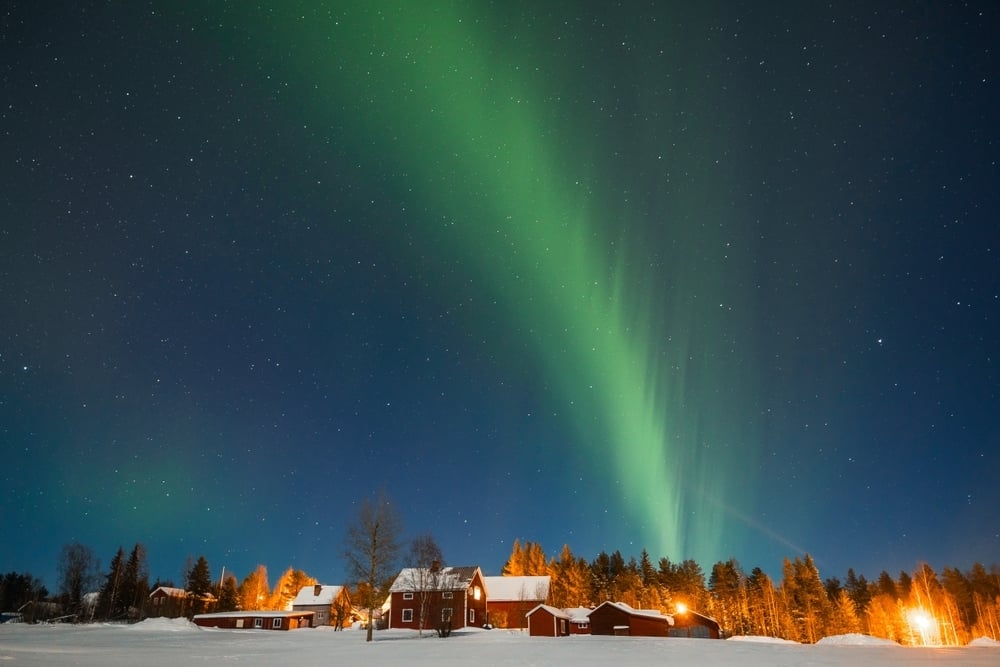
Ideal for those looking for snowy landscapes and quieter surroundings. Finnish Lapland, with small villages and little light pollution, is perfect for combining wooden huts, snow and dark skies.
Sweden
The north of Sweden, especially the Abisko region, is known for having many clear nights, which increases the chances of observing, even when it's cloudy elsewhere.
Iceland
A very popular destination and relatively accessible from Europe. The best opportunities to see the aurora are outside Reykjavik, in rural areas with little artificial light.
.jpg?width=1000&height=667&name=aurora%20boreal%20isl%C3%A2ndia%20(2).jpg)
Canada
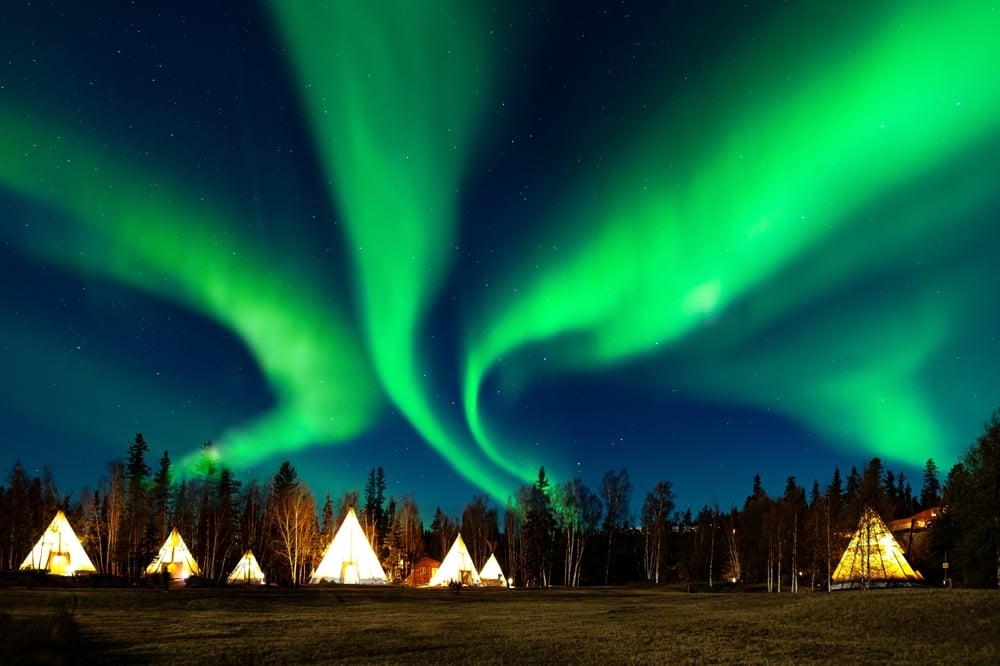
Regions such as the Yukon and the Northwest Territories offer dark skies and long nights and are sought after by those who want to combine wilderness with auroras.
Alaska, United States of America
Fairbanks is one of Alaska's best-known aurora-watching spots, with specific aurora hunting services and good facilities for winter travelers.
Where to see the Northern Lights "best"?
Seeing the Northern Lights depends on three main factors: high latitude, dark skies far from cities and long nights with few clouds. Destinations above or very close to the Arctic Circle, such as Tromsø or Abisko, usually have better odds than areas further south. Even so, no location guarantees 100% success, because solar activity and the weather vary.
Best first-time destinations
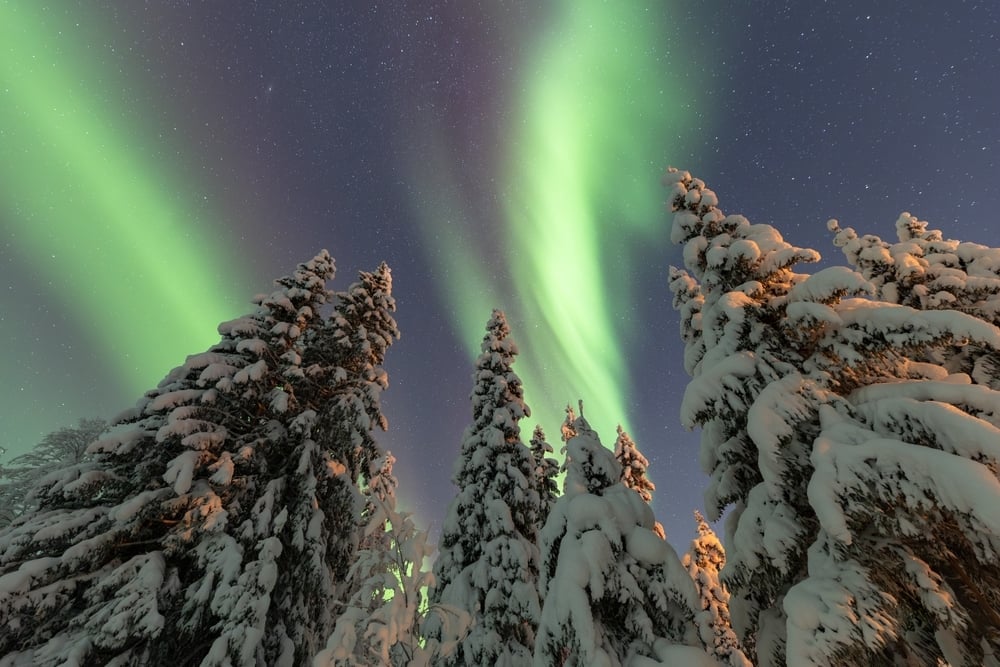
If you're going to see the Northern Lights for the first time, it's a good idea to choose destinations that are used to receiving this type of tourism. Tromsø in Norway, Finnish Lapland and Iceland (outside of Reykjavik) are popular options, with specialized guides, organized tours and infrastructure prepared for the cold and for travelling at night.
When does the Northern Lights appear?
The aurora borealis is only visible at night and at times with little sunlight. In general, the best period is from September to March, when the nights are long in the northern hemisphere.
Frequently asked questions about where to see the Northern Lights
🔹 Where can you see the Northern Lights?
In countries close to the Arctic Circle, such as Norway, Finland, Sweden, Iceland, Canada and Alaska.
🔹 Can the aurora borealis be seen on any night?
No. It depends on solar activity, weather conditions and the absence of artificial light.
🔹 Where are you most likely to see the aurora borealis?
Usually in northern Norway, Lapland and regions with many clear nights and little light pollution.
🔹 Is it possible to see the Northern Lights outside of winter?
Yes, in early fall and late winter, as long as it's at night and the sky is dark, but never during the summer at higher latitudes.
🔹 Is seeing the Northern Lights luck or planning?
It's always a combination of the two. Choosing the right destination, traveling at the right time, staying a few days in the same place and looking for dark skies greatly increases the chances of success. Still, it's nature that decides when the sky lights up.
Traveling to see the Northern Lights means entering territories of dark skies, intense cold and snow-covered landscapes. To experience this spectacle more peacefully, it's essential to think about your protection during the trip.
When you select the travel reason Snow, your Just in Casejá automatically includes the essential basic cover. If you want to be even more prepared, you can add the optional Snow covers, designed for travel in demanding weather conditions, ice activities and unforeseen events in remote regions. Explore all the protections on our webapp and do a Just in Case before you set off in search of the northern lights!


5% discount by subscribing the newsletter!
Stay up to date with exclusive tips and special discounts. By subscribing to our newsletter, you get a 5% discount on your first Just in Case travel insurance*.
Campaign valid from 01/01/2025 to 31/12/2026.
 Not now
The personal data you provide will be processed for the purpose of sending marketing communications via e-mail. We remind you that you have the right to withdraw your consent at any time. Your data will never be used by third parties or by organizations outside Fidelidade. For further information on how we process your personal data, please consult our Privacy Policy.
Not now
The personal data you provide will be processed for the purpose of sending marketing communications via e-mail. We remind you that you have the right to withdraw your consent at any time. Your data will never be used by third parties or by organizations outside Fidelidade. For further information on how we process your personal data, please consult our Privacy Policy. This information does not exempt you from consulting the legally required pre-contractual and contractual information
The Just in Case Travel Insurance is provided by Fidelidade - Companhia de Seguros, S.A., with registered office at
Avenida Álvaro Pais, 14, 1600-007, Lisbon, Portugal
. Share Capital EUR 509,263,524 - registered with ASF under no. 1011.